The BEE-GUARDS Podcast
BEE-GUARDS aims to strengthen the resilience of the European beekeeping sector and beyond by providing sustainable management practices, novel breeding strategies and by developing analytic and digital forecasting tools to enable the sector to adapt to a changing environment.







Episodes

Jun 4, 2026
Jun 4, 2026
31 min
In this episode, we talk with Louise Bartek from SLU University in Uppsala, Sweden, about Life Cycle Assessment (LCA) and carbon footprint analysis in European beekeeping. Louise explains how environmental impact assessments can help create more sustainable and resilient beekeeping practices for the future.
The discussion focuses on how beekeeping can reduce its environmental footprint while supporting pollinator health, biodiversity, and climate adaptation across Europe. The episode is part of the BeeGuards WP7 activities on sustainability and environmental impact.
We also encourage beekeepers, researchers, and stakeholders to participate in the European survey on Life Cycle Assessment:https://netigate.se/ra/s.aspx?s=1302771X540872467X57084
Your host is Flemming Vejsnæs.

Jun 2, 2026
Jun 2, 2026
47 min
Today’s guest speaker is Martin Gabel, researcher at the Bee Institute Kirchhain in Germany, part of Landesbetrieb Landwirtschaft Hessen, and an important contributor to Work Package 1 — Management for Resilience, and Work Package 2 — Breeding for Resilience.
In this episode, we focus on how BEE-GUARDS is developing innovative approaches to strengthen honey bee resilience against Varroa, climate stress, and changing environmental conditions.
Work Package 1 explores an innovative low-input beekeeping management approach across a pan-European apiary network spanning eleven countries. Researchers and beekeepers are testing threshold-based management strategies designed to support natural resilience in honey bee colonies. Instead of relying heavily on routine chemical treatments and supplementary feeding, the project evaluates how colonies perform under more selective environmental conditions, while carefully monitoring colony health, survival, productivity, and adaptation across different climates and landscapes in Europe.
Work Package 2 builds directly on these field experiences by focusing on accelerated breeding for resilience traits. The goal is to improve adaptation to Varroa pressure and climate stress through innovative mating and selection strategies. Across different climatic regions, mating stations are being established where colonies develop under varying levels of selection pressure. By allowing natural selection to play a larger role in breeding, BEE-GUARDS aims to strengthen traits linked to survival, Varroa resistance, virus tolerance, and overall colony resilience. Advanced genomic tools, breeding value estimation, and cryobanking of honey bee germplasm are all part of this effort to safeguard Europe’s honey bee diversity for the future.
We will also briefly touch on Work Package 8, which investigates the relationship between managed honey bees and wild pollinators, helping develop sustainable beekeeping practices that protect biodiversity and ecosystem balance.

May 27, 2026
May 27, 2026
30 min
Welcome to the BEE-GUARDS podcast — a Horizon Europe project working to strengthen resilient beekeeping, protect pollinator biodiversity, and support sustainable beekeeping practices across Europe.
All relevant links here: https://beeguards.eu/citizen-science/
In today’s episode, we are talking with Sergio from CREA in Bologna, who is actively involved in the field work connected to Work Packages 1, 2, and 8 of the BEE-GUARDS project.
WP1 focuses on innovative beekeeping management across a large pan-European apiary network. Researchers and beekeepers are testing low-input and threshold-based management strategies, comparing them with more conventional approaches, while studying colony survival, resilience, climate effects, and Varroa management under real field conditions.
WP2 is dedicated to breeding strategies for resilient bees. The work investigates how natural selection, Varroa resistance, climate adaptation, and advanced breeding methods can help develop stronger and more resilient honey bee populations for the future.
WP8 focuses on field site activities and practical implementation, helping connect research, environmental assessment, and real-world beekeeping conditions across the different European study locations.
Together, these activities combine science, field observations, breeding, and collaboration with beekeepers to better understand how we can safeguard honey bees and pollination services in a changing environment.
Your host today is Flemming Vejsnæs from the Danish Beekeepers Association.
Let’s get started.

Feb 17, 2026
Feb 17, 2026
36 min
In this episode, we speak with Wolfgang Pointecker, president of the Austrian Commercial Beekeepers Association and a commercial beekeeper himself. Drawing on his own day-to-day experience in professional beekeeping, Wolfgang shares insights from both the apiary and the organizational level. We discuss the key challenges facing commercial beekeeping in Austria and across Europe, including bee health, forage availability, market pressures, regulation, and climate impacts. The conversation focuses on how these issues affect professional beekeepers in practice, and what changes may be needed to secure the future of commercial beekeeping. This episode is relevant for beekeepers, farmers, policymakers, and anyone interested in sustainable food systems and pollination.

Jan 23, 2026
Jan 23, 2026
29 min
In this episode, we explore how scientists are working to protect the future of honey bees through cryopreservation. As part of the BEE-GUARDS project, researchers are building a European network of cryobanks and developing groundbreaking methods to preserve honey bee embryos for the first time.
Our guest today is Jesús Yániz, Professor at the Universidad de Zaragoza, who is leading the cryopreservation work within WP2 – Breeding for Resilience. Together, we explore how preserving genetic diversity can strengthen honey bee populations and help secure pollination services for generations to come.

Dec 24, 2025
Dec 24, 2025
34 min
Today our guest is Ralph Büchler, well known for his long-standing work in varroa-resistant bee breeding. For many years, he was the head of the Beekeeping Institute in Kirchhain, Germany—an institute strongly focused on applied science within beekeeping. Although Ralph is now retired, he has not stepped away from his passion: continuing the search for varroa-resistant bees. Another key area of his work and interest has been the use of brood breaks during the season, using queen caging as a management tool. While on a trip to Denmark – yes, inspire the Danish beekeepers to work on varroa resistance, I was lucky to make this podcast just before take-off at Copenhagen Airport, where we recorded a great conversation about breeding, resistance, and his role as a member of the BEE-GUARDS advisory board.

Dec 16, 2025
Dec 16, 2025
35 min
Victoria Soroker is our well-known BEE-GUARDS member from Israel. Over the years, her research has focused on the challenges of Varroa, helping to develop more sustainable solutions for beekeepers. In this episode, we talk about her lifelong work and what it takes to run a BEE-GUARDS test apiary — a great conversation recorded at the foot of the Acropolis in Athens.

Dec 8, 2025
Dec 8, 2025
56 min
Steve Riley is a dedicated beekeeper committed to developing varroa-tolerant bees. He blends hands-on experience with smart, data-driven breeding methods, all aimed at strengthening colony health through selective genetics. We met by chance on the train to Zurich Airport, took a bit of time to explore the city, and quickly found ourselves deep in conversation—so why not turn it into a podcast?
Be sure to check out his excellent book The Honey Bee Solution to Varroa—a must-read!

Nov 19, 2025
Nov 19, 2025
22 min
Chile’s landscape stretches from the world’s driest desert in the north to icy fiords and glaciers in the south. Towering Andes mountains run along its eastern edge, shaping dramatic valleys and active volcanoes. The central region offers fertile plains and a Mediterranean climate ideal for vineyards, while the Pacific Ocean carves rugged cliffs, long beaches, and vibrant coastal towns. Among these diverse environments, Chile’s 10,000 beekeepers and one and a half million bee colonies must navigate increasingly severe climate challenges. Patricia Aldea wrote her thesis on climate change and its influence on Varroa, shedding light on the pressures facing Chilean beekeeping today.

Mar 24, 2025
Mar 24, 2025
16 min
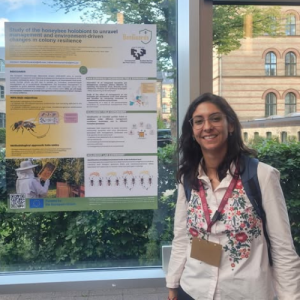
Whoopie 9 and 1. Update on the planning and interaction with the beekeeping stakeholders to produce an interactive WikiBEEdia and how it is to be a test apiary running the innovative varroa management.
Mar 12, 2025
Mar 12, 2025
15 min
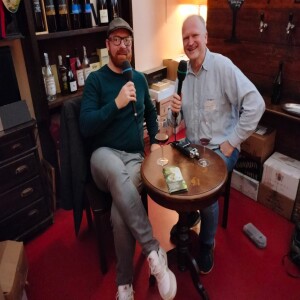
Whoopie 4. Holobiont. Get insight into the secrets of the holobionts by Melanie Parejo from the University of the Basque Country (UPV/EHU). Whoopie 4 will provide a handbook for standard methods in bee hologenomic research, integrate differ “-omic” methods in field and laboratory exp0eriments and determine the specific genetic and microbial combinations that foster honeybee resilience under the innovative management concept.
Mar 4, 2025
Mar 4, 2025
31 min
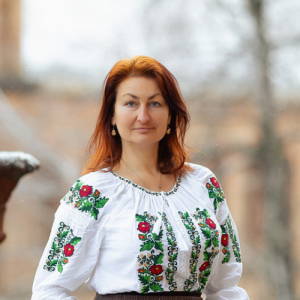
Cozy conversation with Dylan Elen, about the innovative varroa treatment but also the importance to conserve the subspecies of Apis mellifera. The conversation comes close to activities within the BEE-GUARDS and what is the aim of the Dark Bee association. ZwarteBij.org is already running several breeding programs. Operating multiple mating stations. They offer courses on beekeeping, breeding, ...
Feb 24, 2025
Feb 24, 2025
41 min
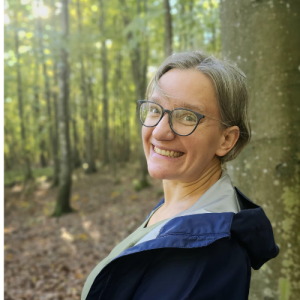
BEE-GUARDS aim is to strengthen the resilience of beekeeping beyond our project partners. Flemming Vejsnæs, did meet Maria Fedoriak who is one of our MAF members (member of our multi actor forum) in Padova telling us about the beekeeping situation in Ukraine at the moment. It is a long, important and very strong story. You need to listen!
Feb 20, 2025
Feb 20, 2025
16 min
The Wilde family business, a well-known big queen breeder operation with focus on artificial insemination. In the BEE-GUARDS project they the testing of innovative varroa management. The story of a family company and how to run the testing.
Feb 13, 2025
Feb 13, 2025
10 min
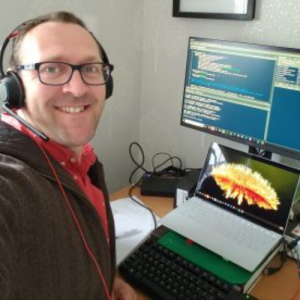
Giles Budge, Newcastle Upon Tyne. The Scientist behind BEE-GUARDS. We are very curious, so we try to have conversations with our partners on what background and what else they are doing of scientific work.
Feb 9, 2025
Feb 9, 2025
17 min
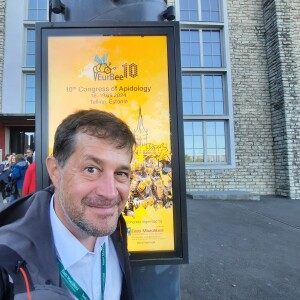
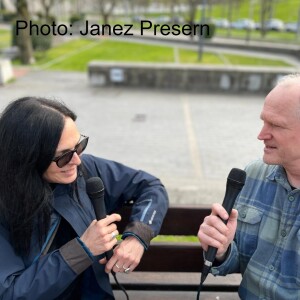
Whoopie 3. Monitoring & Modeling. Janez Presern from Agricultural Institute of Slovenija talking about that WP3 serves as an integration hub for the data we collect. What do we collect? We have established an Europe-wide network of colonies established with various sensors to monitor the colony’s development and associate it with environment. We augment these data with data of external providers, such as weather services to develop a decision support system to assist beekeepers.
Dec 4, 2024
Dec 4, 2024
11 min
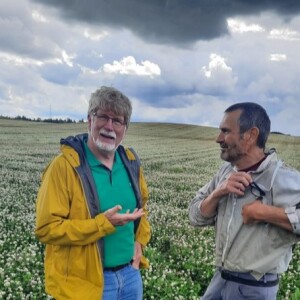
Apimondia is one of our partners in BEE-GUARDS. The president of Apimondia Jeff Pettis takes us in the world of Apimondia. Apimondia is the International Federation of Beekeepers’ Associations. It represents the interests of apiculture worldwide (122 Member Associations from 73 countries). It facilitates links between beekeepers, scientists and all those involved in beekeeping and represents apiculture at international level to many bodies, for example GATT, the Food and Agriculture Organization of the UN (FAO), consumer and agricultural interests. Apimondia is also active in boosting the quality of honey (fight against honey fraud) and natural beekeeping.

Nov 17, 2024
Nov 17, 2024
15 min
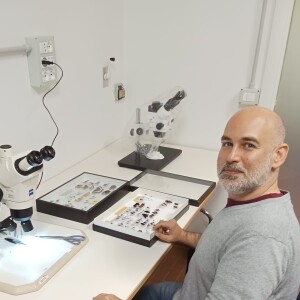
Today we present ELGO ‘DIMITRA’ from Greece, one more of our partners. Fani Hajina presents a very exciting institute. Ellinikos Georgikos Organismos DIMITRA is a research organization under the auspices of the Ministry of Rural Development and Food in Greece, and it is devoted to agricultural research, education and product quality control. The Department of Apiculture (Institute of Animal Science) is undertaken research on topics like bee disease control with organic methods, bee breeding and conservation, and the effects of pesticides. In our team, apart from the Bee Experts (Fani & Leonidas), we also have members from other departments/ Institutes of ELGO ‘DIMITRA’ who have the expertise on pollination, animal genetics and animal reproduction & cryopreservation.
Ps. Hope you can see the bee on Fani's new jacket.
Nov 4, 2024
Nov 4, 2024
17 min
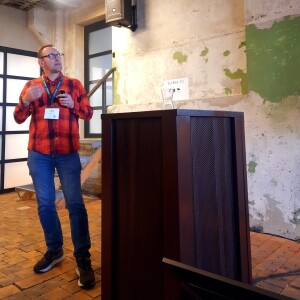
BEE-GUARDS "WP8 - Analysis of plant-pollinator-pathogen networks to assess the impact of beekeeping on wild pollinators" aims to evaluate how beekeeping affects wild pollinators across agricultural landscapes and to identify management strategies that can reduce potential competition. We will perform field and laboratory experiments, as well as analysis of historical data on honey bee density and wild pollinator abundance and diversity. Additionally, we will engage beekeepers and the public in a citizen science initiative to contribute to the research and improving knowledge and awareness of on the important ecological role of wild pollinators.
Oct 30, 2024
Oct 30, 2024
27 min
Listen our podcast: https://beeguards.podbean.com/e/giles-1/
Listen to Giles Budge, Newcastle University from the Whoopie 06- Parasites & Pathogens explaining this important task of the BeeGuards. Our overarching objective is to better understand how climate influences the emergence of pest and pathogen threats, so that beekeeping resilience can be improved by predicting emergence and developing management tools to mitigate threats. We will work on different aspects of mite (Varroa and Tropilaelaps) and small hive beetle control, and predict bacterial (American and European foulbrood), viral (Sacbrood, chronic bee paralysis) and Nosemosis emergence across Europe as we undergo climate change.

Oct 10, 2024
Oct 10, 2024
13 min
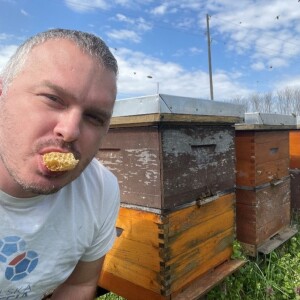
Whoopi 9. In this podcast we speak about an outcome of the BeeGuards project that is meant to stay. Robert Brodschneider from the University of Graz introduces us to WikiBeedia.eu. This is an online encyclopedia all about the honey bee, beekeeping and bee research. You can look up technical terms in many languages, as well as provide your own knowledge on beekeeping for others.
Jul 8, 2024
Jul 8, 2024
27 min
Become a part of the BEE-GUARDS. Citizens Scientist – Beekeeping protocol
As a part of BEE-GUARDS we invite all beekeepers to become a part of our exciting project, doing your share on comparing a new innovative varroa treatment strategi and you “normal” varroa strategi. Listen to Marin Kovačić from Croatia, presenting the Beekeepers Protocol. Putting light on what your involvement could bee in the future. Bee a part of a more sustainably beekeeping in the future. Have a listen!
Sign up here https://ec.europa.eu/eusurvey/runner/BeeGuardsCitizenScienceRegister
Download the Beekeepers Protocol here: https://beeguards.eu/downloads/

Jul 1, 2024
Jul 1, 2024
6 min
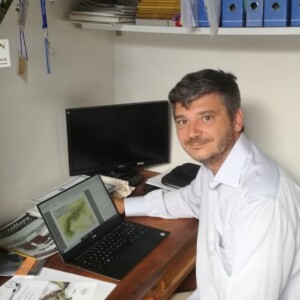
Good question! Listen to Raffaele explaining how you can bee involved, even become asked about your opinion. How you can influence such a big project. Our MAF group is with around 250 stakeholders. Feel free to join, sign up on this mail: maf@beeguards.eu
May 30, 2024
May 30, 2024
19 min
BEE-GUARDS "WP2 - Innovative Breeding" is about to enter its pivotal phase for the current year, as the honey bee mating season is approaching in most European countries; in this episode, we will feature the interview with Raffaele Dall'Olio (BeeSources) who is running the study in Italy in collaboration with CREA. As Italy is the southernmost country involved in WP2, don't be surprised when Raffaele will tell you that both 'conventional' and 'innovative' mating stations are already open!
Mar 28, 2024
Mar 28, 2024
16 min
On a bench close to the Guggenheim Museum in Bilbao, we did meet the coordinator of the BEE-GUARDS: Cecilia Costa. Simply question: What is BEE-GUARDS about? Understand the project within 20 min.
BeeGuards on Two Bees in a Podcast
BeeGuards presented at the famous US Bee Podcast by our Cecilia Costa on the podcast: Two Bees in a Podcast produced by the University of Florida. Episode 194. 11th February 2025.

The BeeGuards consortium comprises 27 partners from 15 countries, including universities, research institutes, IT companies, beekeeping companies, associations and advisors.
Through a multi actor approach and an open and inclusive design of the work program, the BeeGuards team embeds a wide and diversified range of stakeholders.
As a community during this 4-year project, we will perform an international field study evaluating and validating an innovative threshold-based management concept and an accelerated breeding strategy for resilience.
Complementary investigations will elucidate the ways in which management and climate act on honey bees and other pollinators.
Our open and participatory actions include the development of a long-term self-sustaining community tool: a WikiBEEdia website where we will share and promote innovative concepts and BeeGuards results, including a Quest for sustainable beekeeping practices.
BeeGuards will show how to protect pollinator biodiversity, to ensure the future provision of pollination services, preparing the European apicultural sector to meet the climate challenge.
Horizon Europe research and innovation programme Grant Agreement No. 101082073
“Views and opinions expressed are however those of the author(s) only and do not necessarily reflect those of the European Union or European Commission. Neither the European Union nor the granting authority can be held responsible for them.”